• Order before 1:00pm for delivery on your next scheduled delivery day
  • Free delivery on orders $300.00 and above
  • Need help? Call us on 1300 331 753

The journey of coffee

“What a pleasure it is to grab a cup of coffee from the machine. But have you ever wondered what journey this black gold has taken before it arrives at your company? Let’s walk through the main steps of the coffee journey together and discover how each step influences the final taste.

First step: harvesting on the plantation.

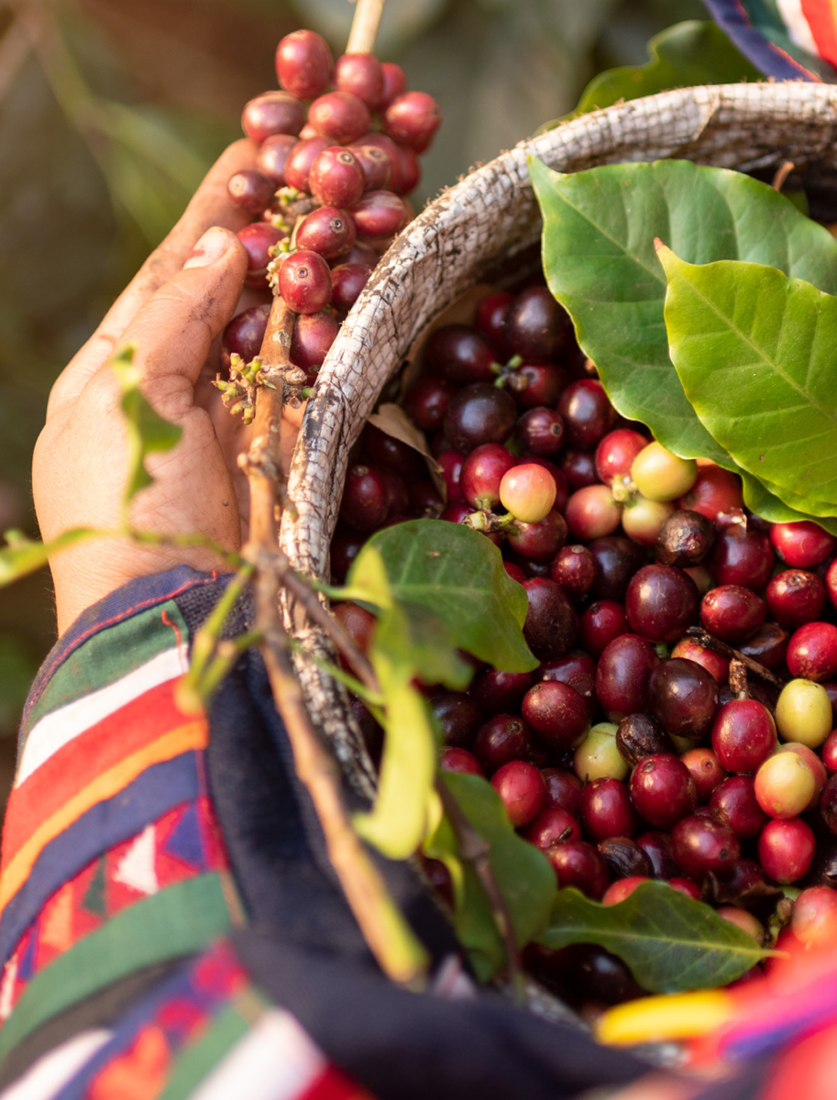
The journey of the coffee bean begins on the plantation. Coffee beans are actually seeds. Each cherry of the coffee plant usually contains two seeds, sometimes one. The seeds are cultivated in eighty countries worldwide, but mainly around the equator — from Brazil, the world’s largest coffee supplier, to Vietnam, the second largest. This vast region is also known as the coffee belt.There are about one hundred types of coffee beans, of which Arabica and Robusta are the best known. Arabica grows in hilly regions and ripens slowly, which gives it a fruity aroma. Robusta grows in tropical lowlands, contains more caffeine, and has a somewhat more bitter taste.When the cherries of the coffee plant are ripe, they are harvested either by hand or by machine.

Did you know?

A coffee plant produces about 1.5 kilos of fruit.
This yields roughly 500 grams of roasted coffee.
A picker harvests between 50 and 100 kilos of coffee cherries per day

Time for processing: wet or dry

After the harvest, the coffee cherries are processed using either the wet or the dry method. The method plays an important role in determining the flavour of your cup of coffee.With the wet method, the cherries are washed several times, stripped of their skin, and fermented. This removes all remaining pulp and mucilage. Unripe cherries float to the surface during washing.After that comes the drying stage: the beans, still in their parchment layer, are turned several times a day for five to six days. Right before transport, this parchment layer is removed.Washed beans produce a coffee with fruity notes, a hint of freshness, and a light acidity.With the dry method, the process starts by sieving out twigs, stones, and other impurities. Then, the cherries are spread out in full sunlight and turned regularly for two to three weeks. During this period, the beans remain inside the pulp, allowing them to absorb the sweet flavour of the fruit.The result is a coffee with more body.

Ships full of coffee

In the country of origin, the beans already undergo strict quality control. Samples are roasted, ground, and tasted. The bags then receive a quality seal and are shipped. Coffee is the most traded product in the world after oil.

We blend the beans ourselves…

When the beans arrive at our facility, our experts check their quality. They determine which beans from different origins combine to create the most delicious blend.The advantage? Always the same quality, taste, and aroma.After blending, the beans are roasted — a crucial step for the flavour and aroma of the coffee.

…and we roast them

Roasting takes place at temperatures between 200 and 250 degrees. The heat changes the colour of the beans — from green to brown — as well as their chemical composition.This process is delicate, because too many aromas can be lost if not done carefully.We distinguish three main roasting levels:

Fair and sustainable

At Jacobs Douwe Egberts Professional, coffee is fair and sustainable. We work together with certification bodies such as Fairtrade and UTZ. In this way, we commit ourselves to good working conditions and respect for the planet. Our goal: a sustainable chain, from harvest to cup.

Types of coffee

Fresh Coffee Beans

In an espresso machine, the beans are freshly ground and brewed with water under high pressure, just like a barista would do. With a successful extraction, a beautiful crema layer forms.

Filter Coffee

The method many people use at home: ground coffee is brewed with water under low pressure and passes through a paper or metal filter.

Liquid Coffee

Liquid coffee is a concentrated extract, produced under optimal conditions and frozen to preserve all aromas. With the press of a button, the machine combines the right amount of coffee and water. Options include Cafitesse and Promesso, among others.

Instant Coffee

Well‑known in single‑serve sachets and ready in just a few seconds. Fully automatic instant‑coffee machines add water to concentrated granules. A small dose is enough for a flavourful cup.

Pods and Capsules

For those who enjoy variety or drink coffee only occasionally, pods and capsules are ideal. Choose your flavour, press the button, and enjoy coffee with a delicious crema layer.

Arrival at its destination

As you can see, coffee travels an impressive journey before it ends up in your cup — from the plantation, to production at Jacobs Douwe Egberts Professional, and finally to your company.Flavour, aroma, and intensity are the result of all these steps. Now that you know the journey, you will appreciate this black gold even more. Enjoy.

Related articles